Blog

What Is New York's Statute of Limitations for Filing a Personal Injury Claim?

After an accident leaves you hurt, you can bring a personal injury claim here in Nassau County, but there are deadlines. Talk to a personal injury lawyer as soon as you can to make sure you know what your rights are and protect them. 

From a Nassau County Personal Injury Lawyer: Deadlines and Other Issues

What's a Statute of Limitations?

This is a law that places a time limit on when you can bring a civil action in court. Once that period ends, you typically lose any right to sue for damages, no matter how strong your case might be. 

In New York, you have three years from the date of the accident itself to bring a claim in most cases of personal injury. The clock starts on the day the event occurs.

For medical malpractice, you must begin the action within two years and six months of the act, omission, or failure that caused the harm or from the end of continuous treatment for the same condition. Wrongful-death actions must be filed within two years of the date of death. 

When the Defendant Is Government

When the potential defendant is a city, county, town, village, school district, or similar public entity, you have to give notice of your intent to bring a claim within ninety days. That notice is a condition precedent, which means that if you don't get it done, you can't bring a lawsuit later. After the notice is properly served, the lawsuit itself must be started within one year and ninety days. 

Exceptions for Minors and Similar

Minors and those with a qualifying legal disability at the time they are injured have more time to bring their claim. For as long as a person is legally disqualified from bringing an action (because of being under 18, for example, or because they are disabled), the clock on the statute of limitations is paused

It starts running only when the person becomes legally capable. For a child injured before age eighteen, the three-year period starts on their 18th birthday. For someone in a coma, the clock would begin as soon as they wake up and have the mental capacity to make decisions again. 

Other Exceptions

If a defendant leaves the state to avoid the issue and can't be reached, the clock effectively stops until they can be reached. If it's discovered that the defendant fraudulently concealed their culpability, this can also sometimes extend the time. Exceptions are narrow, however, and it's never wise to assume that you will qualify for one. It's always best to talk to a lawyer as soon as possible.

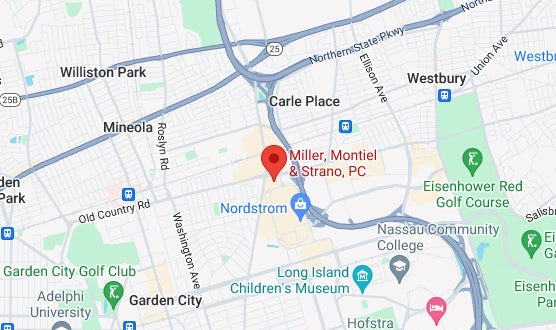
If you have been injured, the safest course of action is to get a review of the facts while the records are still fresh. Contact us now at Miller, Montiel & Strano in Garden City, NY for a free consultation on your case. Our firm is one of just 5% across New York to have been named Super Lawyers, and we've been protecting victims here in New York City for over 50 years.

Recommended Posts

How Can You Recover Compensation After a Construction Site Accident?

After a construction site accident in Long Island, NY, there are things a personal injury attorney can do to help you recover compensation. How a Personal Injury Attorney in Long Island, NY Can Help You Recover Compensation After a Construction Accident Investigating Everything Your attorney will look at the full circumstances of the incident and identify every party whose actions or omissions contributed to the harm you suffered. That way, your lawyer will be able to see whether New York labor law provisions apply and what options there might be for bringing a personal injury claim. Because construction sites often have multiple contractors, subcontractors, property owners, and equipment suppliers involved, it's important to map out the relationships among them so that no potential source of recovery is overlooked.Workers' compensation may already be providing you with some limited medical coverage and partial wage replacement, but your attorney can evaluate whether a separate third-party claim can proceed against other entities besides your direct employer. Negligence by another contractor, a property owner, or a manufacturer of defective equipment can all be causes for bringing a claim, and a third-party claim like that can get you more than workers' comp allows, including full lost earnings and compensation for your pain and suffering. Managing Communications Insurers like to contact victims directly and ask questions or request statements that are designed to get you to make a mistake and say something they can use against you. Your lawyer protects you throughout the process by managing all communications with insurance carriers and opposing counsel. When settlement discussions stall, your attorney can also prepare and file a lawsuit if necessary and represent you in court. Collecting and Preserving Important Evidence Your lawyer will direct the collection and preservation of all evidence that could otherwise disappear once the work resumes. If you contact a lawyer quickly, they can arrange for photographs, measurements, and expert inspections of scaffolding, ladders, and machinery. They'll also collect any witness statements quickly and secure any OSHA investigation reports or citations. Assessing the Full Impact Another important way your attorney maximizes your claim is by calculating the full economic impact of the injury. This requires assembling all your medical records, projecting the cost of any future treatments, and calculating both your past wage loss and any permanent reduction in earning capacity you might suffer due to the injuries. Then they'll develop your non-economic damages for pain, suffering, and diminished quality of life through detailed documentation of how the injury has affected you and all the relevant medical evidence. Talk to an Experienced Attorney Today Visit Miller, Montiel & Strano today to set up a free, no-obligation consultation, or call us at 516-363-5003. Partners at our firm handle every matter personally rather than delegating to junior staff, so you can be confident that an experienced attorney will be protecting your right to the full compensation the law allows you. We serve victims across Long Island and throughout New York City.

Injuries on Public Property: What You Need to Know About Filing a Claim in New York

Public property injuries are a type of premises liability issue, but they come with extra steps because the government is involved. You need to act fast, talk to a lawyer, and gather solid evidence right away. Local and state governments have a duty to maintain sidewalks, parks, roads, transit stations, and public buildings, and if a dangerous condition like a broken sidewalk, icy patch, pothole, or poor lighting causes your injury—and the government entity responsible for it either knew or should have known about the condition—you may have a valid claim. You must show the public entity owed you a duty of care, breached it by failing to fix or warn about the hazard, and that this breach directly caused your injuries. Unlike with certain private property cases, you cannot assume liability just because you fell. In many cases, the key will be proving there was notice of the hazard. This can be actual (someone told the government about the issue, and there's a record of that report) or constructive (the government should have known about it in the ordinary course of regular inspections). Special Rules When Suing Government Entities Under New York General Municipal Law, you typically must file a Notice of Claim within 90 days of the injury. This written notice must explain the details of what happened, where and when the incident occurred, the nature of your injuries, and the damages you are seeking. If you don't file this notice within the required timeframe, you may lose your right to pursue compensation. A typical Notice of Claim includes information such as: The date, time, and exact location of the incident A description of the dangerous condition that caused the injury How the accident occurred The injuries sustained The name of the injured person A general description of the damages being claimed Although the Notice of Claim does not need to include every piece of evidence or every legal argument, it should be accurate and complete. Missing information or errors can create unnecessary obstacles later in the claims process. After the Notice of Claim is filed, the government entity generally has 30 days to request a hearing under General Municipal Law § 50-h, where the injured person may be asked questions about the incident before a lawsuit can proceed. In most cases, you then have one year and 90 days from the date of the accident to file a lawsuit against a city, county, town, or village. This deadline is significantly shorter than the three-year statute of limitations that typically applies to personal injury claims against private property owners. Different Government Agencies Have Different Rules One of the biggest mistakes injured individuals make is assuming every government agency follows the same procedures. In reality, filing requirements can vary depending on who owns or maintains the property where the injury occurred. For example, claims involving the New York City Transit Authority (NYCTA) generally require a Notice of Claim within 90 days, but the Transit Authority has its own procedures and requirements that differ from those of the City of New York. Similarly, counties, towns, villages, school districts, and other public authorities may each have their own rules governing where and how a Notice of Claim must be served. Determining the correct government entity is critical. A sidewalk, roadway, park, or transit station may be maintained by a city, county, state agency, or public authority. Filing your claim with the wrong agency can result in delays—or worse, dismissal of your claim. Federal property, such as a United States Post Office or other federally owned buildings, is governed by the Federal Tort Claims Act, which follows an entirely different administrative claims process and deadlines. Because identifying the proper defendant is not always straightforward, consulting an experienced attorney as soon as possible can help ensure your claim is directed to the correct agency from the start. Common Mistakes That Can Prevent a Successful Claim Government claims are highly procedural, and even otherwise valid cases can be dismissed because of technical errors. Some of the most common pitfalls include: Missing the 90-day Notice of Claim deadline Filing the Notice of Claim with the wrong government agency Naming the wrong defendant in the claim or lawsuit Providing inaccurate or incomplete information about the accident Failing to preserve evidence such as photographs, witness information, or medical records Waiting too long to speak with an attorney While courts may, in limited circumstances, allow a late Notice of Claim, these requests are discretionary and far from guaranteed. It is always safest to assume the 90-day deadline is firm and act immediately after an accident. From a New York Accident Lawyer: Building a Strong Claim To improve your chances of recovering compensation: Work with experienced counsel who has handled claims against cities, counties, and other government entities. Report the dangerous condition as soon as possible if it has not already been documented. Photograph the accident scene before the condition changes or is repaired. Save every piece of evidence, including medical records, receipts, and correspondence. Keep a daily journal documenting your pain levels, limitations, and how the injury affects your daily life. Attend all medical appointments and follow your treatment plan. Avoid discussing your case with insurance representatives or government investigators before consulting your attorney. Taking these steps early can help preserve important evidence and strengthen your claim. Don't Wait to Protect Your Rights You have real rights when you're injured on public property, but the process is time-sensitive, and the procedural requirements are far more complex than in a typical premises liability case. Missing a deadline or filing against the wrong government entity can jeopardize an otherwise valid claim. If you've been injured on public property, contact Miller, Montiel & Strano, PC at 516-363-5003 as soon as possible. Our attorneys have decades of experience representing injury victims throughout New York and understand the unique rules governing claims against government entities. Not sure whether your Notice of Claim has been prepared correctly or whether you've identified the proper government agency? Contact us today for a free Notice-of-Claim review. We'll evaluate your situation, answer your questions, and help you take the next steps to protect your rights before critical deadlines expire.


How Can a Lawyer Help You Deal With Insurance Adjusters?

Having to deal with an insurance adjuster after an accident can be frustrating and leave you feeling vulnerable. The adjuster usually cares about the insurance company's bottom line more than your needs, and they're trained to ask questions in ways that will get you to say things they can use to deny or devalue your claim. Talk to an accident lawyer in New York right away so you have someone on your side to handle those conversations and protect what you deserve. The Role of the Insurance Adjuster Insurance adjusters work for the company that pays the claim, and their main job is to investigate what happened and settle the claim for as little as possible (ideally, nothing, if they can deny it altogether). They review police reports, talk to witnesses, check your medical records, and overall just look for ways to reduce their company's liability. You might think the adjuster wants to help you get fair payment, and they talk a good talk sometimes. But in reality, they answer to their employer, whose goal is to pay as little as possible. The Role of Your Accident Lawyer in New York Having a lawyer levels the playing field. A lawyer who has been down this road before knows the patterns and what these companies are up to, and won't let quick pressure tactics influence your decisions. Common Tactics Adjusters Use "Can I Record You?" Adjusters love to record calls, either asking quickly in passing or sometimes even without clear notice at all. They do this so they can ask questions that encourage you to say something that hurts your case. With the call recorded, they can then review it endlessly to evaluate whether there's something they can use, and anything you say later can be compared against the call to see if "your story has changed." When you hire a lawyer, they take over all communication. You no longer have to worry about what to say or avoid saying, as your attorney will review every request and respond in writing. If the insurer calls, you just say, "Please speak with my lawyer, goodbye." "Did You Contribute?" In New York, pure comparative negligence rules mean that you can recover damages even if you share some fault, but the amount you can recover decreases by your percentage of blame for the incident. Adjusters love to shift as much blame onto you as possible to cut the payout for their company. Your lawyer will push back with evidence and make sure you don't get blamed a single percentage point more than you should. "We've Calculated Your Losses At..." The insurance company will often undervalue your losses, and the only way to counter this is with a good lawyer who knows how to properly calculate everything, including current and future medical costs, lost earnings, diminished earning capacity, and pain and suffering. Your attorney will gather documentation from doctors, economists, and life-care planners when needed and present a demand package that shows the true long-term impact of what you've suffered. Dealing with adjusters alone puts you at a disadvantage. Level the playing field and contact us now at Miller, Montiel & Strano in Garden City, NY for help anywhere in Nassau County.